The Situation is Fluid

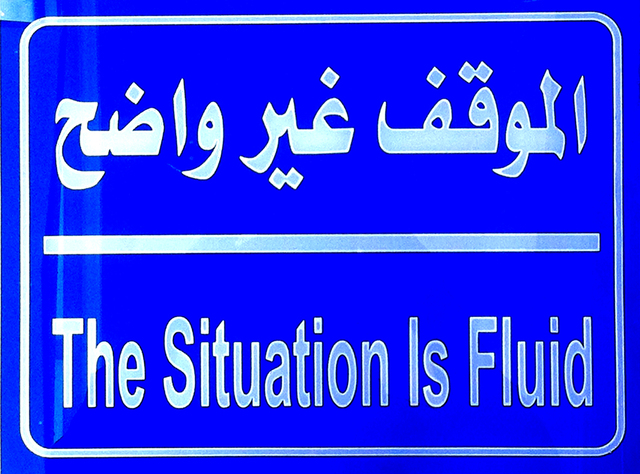
Permanent Collection Presentation
From 25.01.2025
he M HKA collection consists of around 7,500 works, with acquisitions by the museum and works acquired by the Flemish Community making up the majority, in addition to donations and a number of other public funds that the M HKA makes accessible. The Situation is Fluid brings together works from the 1960s to the present from the museum’s collection. A period in which the world seems to be morphing increasingly rapidly into a complex space that has no centre, in a transformation that is spurred by decolonisation, Cold War and neoliberalism and fuelled by inequality and climate change. A period also in which the role of artists, the relationship of culture and society, and the boundaries of art are constantly questioned and redefined. This compact collection presentation starts from the international post-war avant-garde in Antwerp and uses the past as a platform to explore the multipolar order of the present and future.
The permanent collection presentation features work by Marina Abramović, Chantal Akerman, Hüseyin Bahri Alptekin, Marcel Broodthaers, David Claerbout, Lili Dujourie, Marlene Dumas, Jimmie Durham, Andrea Fraser, Anna-Bella Geiger, Craigie Horsfield, Ilya & Emilia Kabakov, Nikita Kadan, Barbara Kruger, Nicola L., Taus Makhacheva, Gordon Matta-Clark, Cady Noland, Otobong Nkanga, Panamarenko, Michelangelo Pistoletto, Laure Prouvost, Ayman Ramadam, Chris Reinecke, Oksana Shachko, Nancy Spero, Walter Swennen, Luc Tuymans and Anne-Mie Van Kerckhoven.
Click here to browse the digital scan of the exhibition.
Items
Lili Dujourie is trying to push the space of perception and awareness from a social political non-discursive fundamental feminine position. She is always on the edge of what is possible and of what might fail, trying to push this edge. Searching on this challenge towards an autonomous visual proposal; an opening towards a spatial awareness.
Since the late 1960s, Nicola L. has focused on a series of so-called 'pénétrables': rectangles of stretched canvas into which participants can put their arms, legs and heads in order to literally penetrate the painting and become one with the art. She uses the structural elements of traditional painting to explore the limitations of what she sees as a passive medium. The monochrome canvases are described with natural elements such as earth, cloud, flower, sky, forest.