Museum of Parallel Narratives — In the framework of L’Internationale

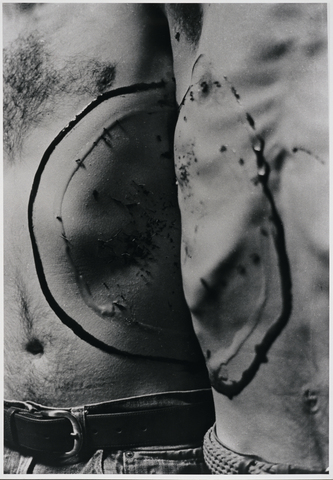
Museum of Parallel Narratives presents a selection of works from the Arteast Collection 2000+ of the Moderna galerija in Ljubljana, the first ever devoted to postwar avant-garde Eastern European art. The exhibition is part of the long-term research project L’Internationale, promoted by several institutions. In addition to more than one hundred works from the collection, four projects of self-historicisation are also on view: the archives created by Artpool (Győrgy Galántai, Júlia Klaniczay), Július Koller, Zofija Kulik, and Lia Perjovschi and CAA, as well as the ‘fictive histories’ of Alexander Dorner, the IRWIN group and Mladen Stilinović. A special section of the exhibition will present diagrams that provide an important overview of the workings of the art system in that region and the construction of an Eastern European narrative. Organised and produced by the Museu d’Art Contemporani de Barcelona (MACBA) in cooperation with the Moderna galerija (Ljubljana), The Július Koller Society (Bratislava), the Van Abbemuseum (Eindhoven) and the Museum van Hedendaagse Kunst (Antwerp). Exhibition curated by Zdenka Badovinac, director of the Moderna galerija in Ljubljana.
Items
Galerie légitime, 1969, zeefdruk, Ed. Galerie Wilbrand, Köln. 120 ex, gesigneerd en genummerd: R. Filliou. afmeting totaal : 65 x 88 cm. afmeting beeld: 51 x 74 cm
TOTalZEROS 71-77 is part of a series of works by Endre Tót which explores reductionist painting. The series is mainly based on linguistic signs. The pictorial elements it contains comprise the picture field, which is in most cases marked with zero, which can be understood both as a sign of broader philosophical and socio-political connotations or as a completely formal element which marks the nonmimetic structure of the painting. It can also be said that in the 1970s Tót produced paintings which were capable of representing a void or an absent image. In these paintings Tót explored empty space, which at the same time did not represent timelessness.
His works can be completely understood only in the specific socio-political context in which they were created. This is despite the fact that his way of painting can be compared with contemporary Western European art - Conceptualism, Pop Art and Minimalism. Despite the fact that the visual appearance of these works does not express anything specifically Eastern European, they can be fully interpreted only in the context of the political monocracy that ruled Hungary at that time. The awareness of the political context is even more present in his "Zero Demonstrations", during which people carried posters with Tót's zeros in the streets of different European cities. The emptiness of grand words which pestered public political life particularly in Communist countries can definitely be connected with the nothingness of Endre Tót's art. The infinite repetition of zeros in some of his works is therefore connected with the monotony and greyness of everyday life in Communist Hungary.
On the other hand the zero in Tót's paintings can also be read as the letter 'o', the middle letter in his name. Playing with his own name, Tót comments on the identity of the artist, which in traditional paintings is usually given with the artist's signature. By using zero as a signature, the artist is both present and absent.
Repetitive zeros are a kind of ornament, a recurring pattern which, like an infinitely repeated word, finally loses its meaning.
Zdenka Badovinac